Read summarized version with
About project
Working time:
2025-ongoing
Industry:
Insurance
The service:
Legacy App modernization
Overview
A leading European pet insurance provider operating in a highly regulated financial environment needed to rethink how its data infrastructure supported the business. Over the years, the organization had built a complex ecosystem of databases powering policy administration, claims processing, actuarial modeling, and regulatory reporting.
While these systems successfully handled day-to-day operations, they were increasingly difficult to maintain and scale.The organization partnered with Dedicatted to transform its legacy data platform into a unified, cloud-based architecture. The goal was not simply to migrate systems, but to create a modern, resilient data foundation capable of supporting faster analytics, lower operational costs, and future growth.
The Challenge
The insurer’s data landscape had evolved into a fragmented environment spread across multiple legacy technologies. Core operational data was stored in 12 zDB2 mainframe databases responsible for policy and claims transactions. Alongside them, six DB2 LUW databases supported actuarial calculations, financial modeling, and regulatory reporting. Altogether, the environment contained over 2,000 tables, hundreds of stored procedures, and complex interdependencies between systems.
To process the growing volume of insurance data, the company also operated an on-premises Apache Spark cluster that analyzed nearly 2.8 million policy events every night to generate risk scores and pricing insights.
- Data was spread across multiple platforms, making it challenging to maintain a consistent and unified view of operations. Dependencies between systems created complexity whenever new features or analytics capabilities were introduced. At the same time, mainframe licensing costs were rising by more than 12-15% each year, placing pressure on long-term infrastructure budgets.
- Regulatory expectations were also evolving. Financial authorities required stronger guarantees around data resilience, traceability, and operational continuity. Demonstrating these capabilities with a fragmented legacy environment was becoming progressively harder.
- Operational risk during modernization. Any migration had to occur without disrupting active insurance operations, including policy issuance, claims processing, and regulatory reporting workflows.
- Limited scalability for analytics workloads. The on-premises Spark cluster handled millions of policy events every night but lacked the elasticity needed to process growing data volumes efficiently.
The organization needed a modernization strategy capable of transforming its infrastructure while maintaining complete operational continuity.
Technology & Approach
Dedicatted approached the project as a large-scale data modernization initiative, designed to consolidate legacy systems while preserving operational stability and business logic.
Deep system discovery and dependency mapping
The first step was gaining full visibility into the existing ecosystem. Dedicatted conducted a comprehensive analysis of the entire database environment, cataloging all 18 database instances, including:
- 2,040 tables
- 375 stored procedures
- 180 triggers
- 340 cross-database joins
This discovery phase revealed complex dependencies between transactional systems, actuarial models, and regulatory reporting workflows. Mapping these relationships allowed the team to design a target architecture that preserved business functionality while simplifying the overall system design.

Consolidating legacy databases into a unified cloud platform
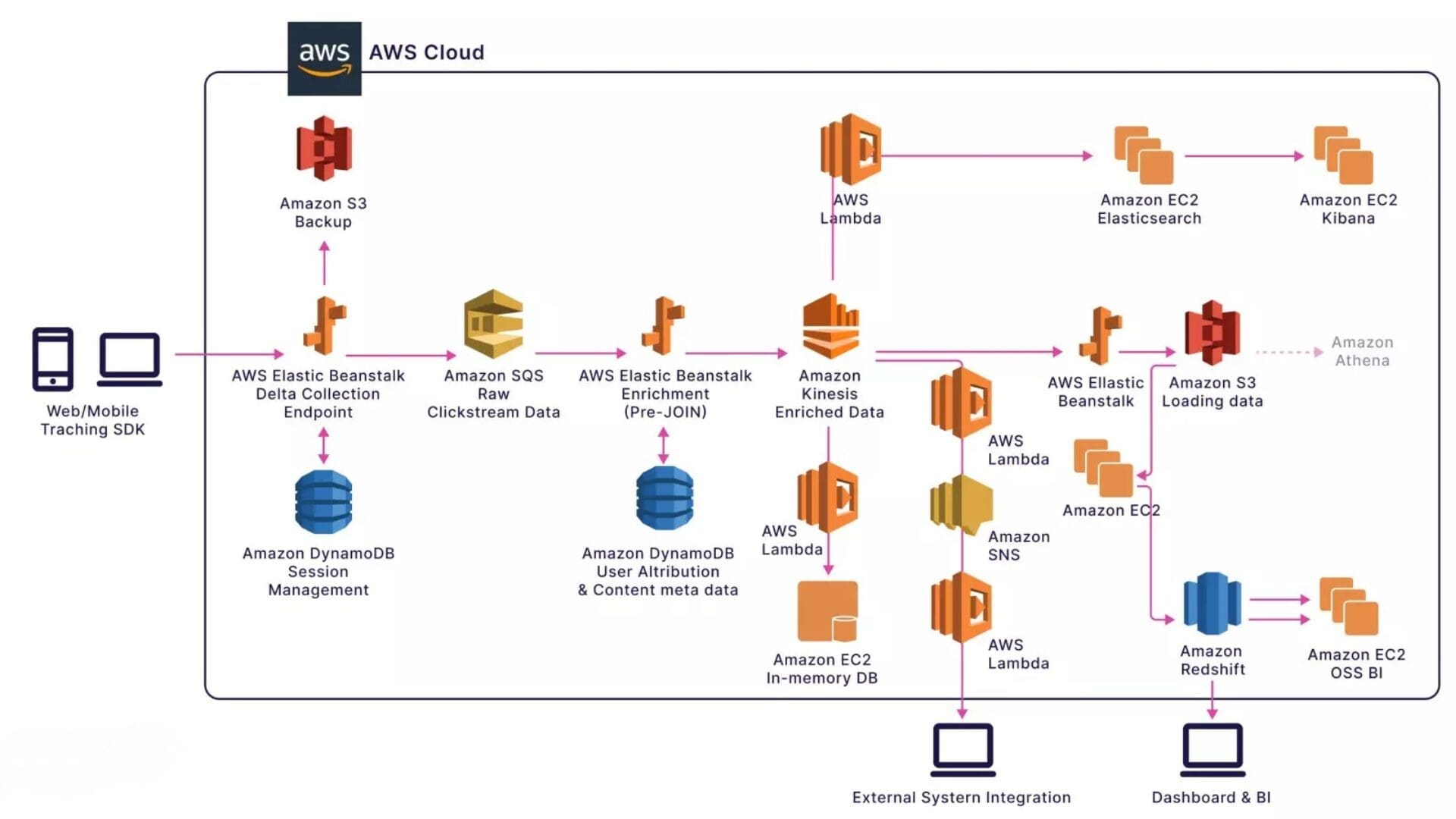
The core of the modernization effort focused on consolidating the fragmented database landscape into a single managed platform built on Amazon Aurora PostgreSQL.Using AWS Schema Conversion Tool (SCT) together with custom-developed transformation scripts, Dedicatted converted schemas and migrated data from both zDB2 mainframe databases and DB2 LUW systems.
The migration process was executed in parallel across multiple environments to minimize risk. In total, 2,040 tables from 18 databases were consolidated into one unified cloud architecture, significantly simplifying operations and improving data governance.
Replatforming large-scale analytics workloads
Alongside database consolidation, the company’s analytics infrastructure also needed to evolve. The existing on-premises Apache Spark cluster, responsible for processing millions of nightly policy events, was migrated to Amazon EMR, enabling elastic scaling and simplified infrastructure management. Analytics pipelines supporting actuarial risk modeling, claims analysis, and premium calculations were redesigned to run on top of an Amazon S3-based data lake, allowing the organization to process growing data volumes far more efficiently.
A key requirement throughout this process was maintaining exact numerical equivalence for the company’s pricing and risk calculations. More than 340 premium calculation formulas were carefully validated to ensure the new system produced identical results to the legacy platform.
Ensuring data integrity throughout migration
To guarantee complete accuracy during the migration process, Dedicatted developed a custom data reconciliation framework designed specifically for large-scale database transitions. This system performed continuous validation using:
- row-level data checksums
- table-level record count comparisons
- financial total reconciliation across reporting systems
The migration itself was carried out in four carefully planned phases over 14 months, using change data capture (CDC) replication pipelines to synchronize legacy and cloud systems during parallel operation. This approach ensured that the new platform could be validated continuously while the existing systems continued running without interruption.
Business impact
The modernization delivered substantial improvements across performance, cost efficiency, and operational resilience.
- Uninterrupted operations: All 18 database systems were migrated with zero downtime, ensuring that policy issuance, claims processing, and regulatory reporting continued seamlessly throughout the project.
- Simplified and unified infrastructure; The previously fragmented environment was consolidated into a single Aurora PostgreSQL platform, dramatically simplifying database management and governance.
- Dramatically faster analytics: Actuarial processing pipelines that once required 4.5 hours overnight now complete in just 38 minutes, enabling faster insights and improved responsiveness for pricing and risk analysis.
- Significant cost savings: By eliminating mainframe DB2 licensing, legacy server maintenance, and the on-premises analytics cluster, the organization achieved a 45% reduction in overall data infrastructure costs.
- Successful regulatory validation: Within three months of launch, the new platform successfully passed an FCA and PRA regulatory audit, supported by stronger data lineage, validation capabilities, and infrastructure resilience.
Long-Term Value
Beyond the immediate operational gains, the modernization created a foundation for the organization’s future data strategy. The unified architecture now enables the company to scale analytics workloads, integrate new data sources, and support evolving insurance products without the constraints of legacy infrastructure.
What was once a complex collection of aging databases has been transformed into a modern, cloud-native data platform capable of supporting advanced analytics, regulatory compliance, and long-term innovation. With a resilient AWS-based architecture in place, the insurer is now positioned to continue expanding its data capabilities, delivering faster insights, greater operational efficiency, and a stronger foundation for the next generation of insurance services.
Related service. Data migration consulting at Dedicatted.