Read summarized version with
Global spending on cloud infrastructure is set to surpass $1 trillion mark by 2030, highlighting the unprecedented potential for innovation within the cloud industry. Several key trends are shaping this landscape. Cloud infrastructures are increasingly complex, with 89% of organizations opting for multi-cloud solutions. The adoption of AI-based technologies is also on the rise. In 2024, 85% of organizations utilize GenAI public cloud services. Additionally, there is a growing awareness of sustainability. 37% of organizations prioritize ecofriendly practices, indicating an increasing willingness to reduce cloud waste.
These emerging trends underscore the need for new financial governance models. We have designed this comprehensive guide to provide FinOps and DevOps professionals with the essential insights required to develop a robust FinOps strategy that aligns with the expected challenges of 2026, capitalizing on the most significant trends in FinOps today.
The compounding effect of these disruptions is an unprecedented rise in costs. For instance, the average price to ship a 40-foot sea container has quadrupled ; truck driver salaries are soaring due to labor shortages in major economies ; and commodity prices are the highest since 2014. And then there’s the ever-growing interest in and demand for responsible, sustainable business practices from consumers, governments, investors, and other critical stakeholders.
Understanding FinOps
FinOps is a cross-functional discipline focused on optimizing the business potential of cloud technology. FinOps promotes informed, data-driven decisions and cultivates financial responsibility through the engineering, finance, and business teams working together. In essence, FinOps breaks down traditional department barriers to cultivate a culture of collaboration and financial expertise.
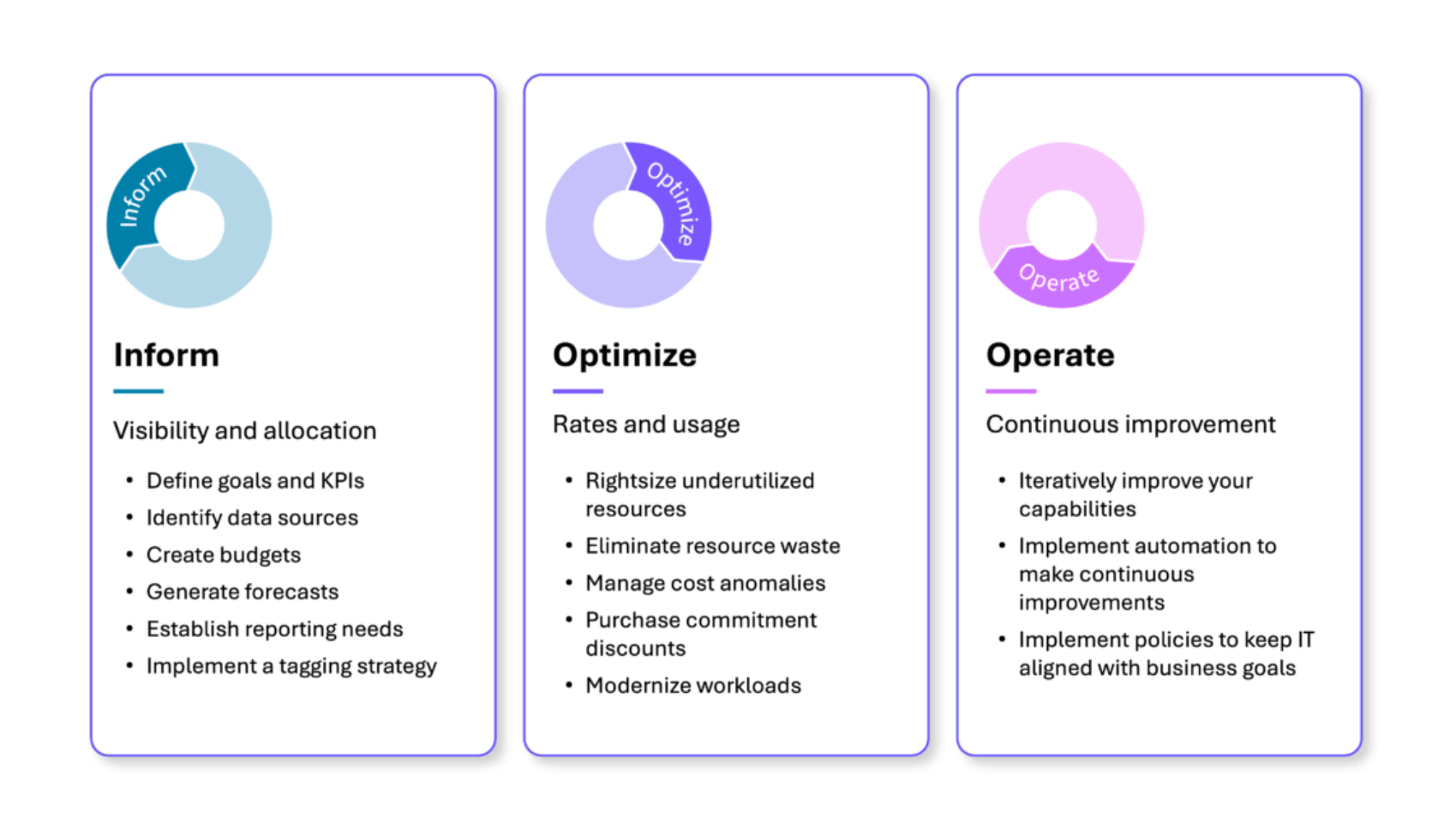
Main Pillars
The FinOps framework is grounded in four main pillars that guide organizations toward a culture of financial accountability and operational excellence in cloud spending. Understanding these pillars is critical to implementing a successful FinOps strategy.
- Collaboration. At the core of FinOps lies the fundamental concept of collaboration. FinOps promotes a cooperative environment among finance, technology, and business teams. It aims to nurture open communication and mutual understanding, enabling organizations to synchronize their cloud expenditures with business results. This way, every dollar spent becomes a strategic step towards the attainment of business objectives.
- Visibility. Transparency into cloud spending and usage is essential for effective FinOps. Organizations must have real-time visibility into their cloud costs and consumption patterns to make informed decisions. This involves implementing tools and processes that enable continuous monitoring and reporting of cloud expenditure, empowering teams with the data they need to optimize cloud resources efficiently.
- Agility. Moving away from conventional models that rely heavily on static budgets and yearly planning cycles, FinOps brings to the table a dynamic approach. This approach endorses real-time decision-making based on the ever-changing nature of cloud costs and usage. With this agility, organizations can quickly adapt to changes in the market and progress in technology. This ensures that their financial strategies are consistently in sync with their current business objectives.
- Optimization. Optimization in FinOps focuses on achieving operational efficiency and cost-effectiveness without compromising on quality or performance. This is achieved through frequent evaluation and recalibration of cloud resources and services, all in line with present and future demands. Constant optimization efforts empower organizations to cut down on waste, utilize reserved instances or savings plans, and seize cost-reduction opportunities that harmonize with their operational needs and budget limitations.
While the principals above set the stage for disciplined FinOps, the true impact becomes evident when applied to a real, growing business. For instance, in our “Optimized Data Architecture: Transforming Data Costs into Growth” case, we helped a tech client slash storage expenses by 80%, cut compute costs by 50 %, and triple search speed via managed architectural redesigns and smart automation. That’s the power of pairing FinOps strategy with expert execution – and it’s exactly what you can expect when you explore our managed services in action.
Setting the Foundation
Set the foundation for FinOps as early as possible. It will not only bear financial benefits but also accelerate the transition. Delaying until cloud expenditure reaches significant levels is not recommended as it would amplify the expenses and efforts required to transition from a traditional financial approach to efficient cloud resource management.
Assessing Current Financial Practices
Before starting your journey into FinOps, you need to understand where you stand. Start with a thorough inventory of your existing financial and operational setups. This initial assessment provides a benchmark for measuring future improvements. You need to understand current practices in cloud spending, procurement policies, and financial management. This step involves reviewing budget allocations, existing contracts, and cost management tools in use.

Identifying Key Stakeholders
Success in FinOps isn’t a one-man job – it’s a team effort. Critical players in this game are high-level executives encompassing finance, IT, operations, and other business units. Each brings something unique to the table, allowing for a well-rounded strategy for cloud cost management. The finance team, for example, provides a vital understanding of budgeting and forecasting. Contrastingly, IT and operations teams play a major role in managing the technical side of cloud resources.
By aligning these distinct functions with common goals, you will foster a culture of cost transparency and accountability within the FinOps framework.
Explore potential advocates, champions, or executive sponsors, and engage them in personalized discussions. Identify the challenges your organization is facing and understand which groups, teams, and individuals are impacted by these challenges. Importantly, engage key business leaders from the beginning. In their survey of more than 200 business executives, McKinsey demonstrated that their early involvement in FinOps practices significantly helped in reducing unnecessary cloud expenses

Defining Team and Governance Structure
Clear governance structures are the heartbeat of successful FinOps. They involve establishing a committee tasked with supervising cloud financial operations and aligning policies and practices with the organization’s strategic goals. The optimal governance models bring together FinOps, IT operations, finance, and business leadership.
The governance model should define roles and responsibilities, decision-making processes, reporting mechanisms, and collaboration strategies across various departments. This structure is pivotal in maintaining accountability, fostering continuous improvement, and scaling FinOps practices as the organization evolves.
Building Cost Optimization Strategies
Once the foundations are set, you can start developing strategic approaches that address all facets of your cloud investments. Building a robust cost optimization strategy requires you to walk through a few pivotal steps:
Identifying Cost Drivers
Understanding the primary drivers of your cloud costs is the first step toward effective management. This entails a comprehensive analysis of your cloud usage, services, and resources to identify areas where expenses are generated. Common cost drivers include:
- Managed services (databases, data warehouses…)
- Compute resources: VM instances, serverless computing services
- Storage: Object storage, Block storage, and archival solutions
- Network services: Data transfer costs, load balancing, and DNS services
Implementing Cost Reduction Tactics
- Eliminate unused resources that incur costs without providing value. Look into Block Storage, Load Balancers, NAT Gateway, IP addresses, Snapshot.
- Right-size resources to match workload demands, to prevent any overprovisioned and unnecessary wastage
- Adopt Discount plans, such as Committed Use Discounts, Reserved Instances, or Savings Plans, for predictable workloads. These not only provide significant cost advantages compared to on-demand pricing but also give you a well-planned financial strategy
- Consider auto-scaling services that adjust resources automatically with fluctuating workloads. This optimizes utilization and ensures that you’re only paying for the resources you need
- Choose the most cost-effective regions for your cloud services. This decision should be based on data locality and pricing differences to ensure the best cost-effectiveness
Implementing these tactics requires continuous monitoring and analysis to ensure they remain effective over time. Yet maintaining such operational precision internally can be resource-intensive and costly. That’s why many organizations choose to partner with experts like Dedicatted for fully managed DevOps and FinOps support.
Whether you need proactive cloud optimization, application operations, or complete infrastructure management – our flexible, scalable packages provide transparent insights, predictable costs, and measurable ROI. Let us handle the complexity, while you focus on innovation and growth
Balancing Cost and Performance
While implementing cost reduction tactics, striking the right balance between minimizing expenses and maintaining outstanding performance and availability might be challenging. Here are some strategies to consider:
- Performance benchmarking to establish baselines and identify optimization opportunities for your new technology. There are many tools, such as Cloudwatch or DataDog, that can help you with this task.
- Adopting modern cloud-native architectures, such as microservices and containers. They can offer the double advantage of enhanced cost-efficiency and performance benefits.
- Using managed or automated services to reduce the operational overhead associated with maintaining complex infrastructure, and to ensure availability at any moment
Techniques for Accurate Forecasting
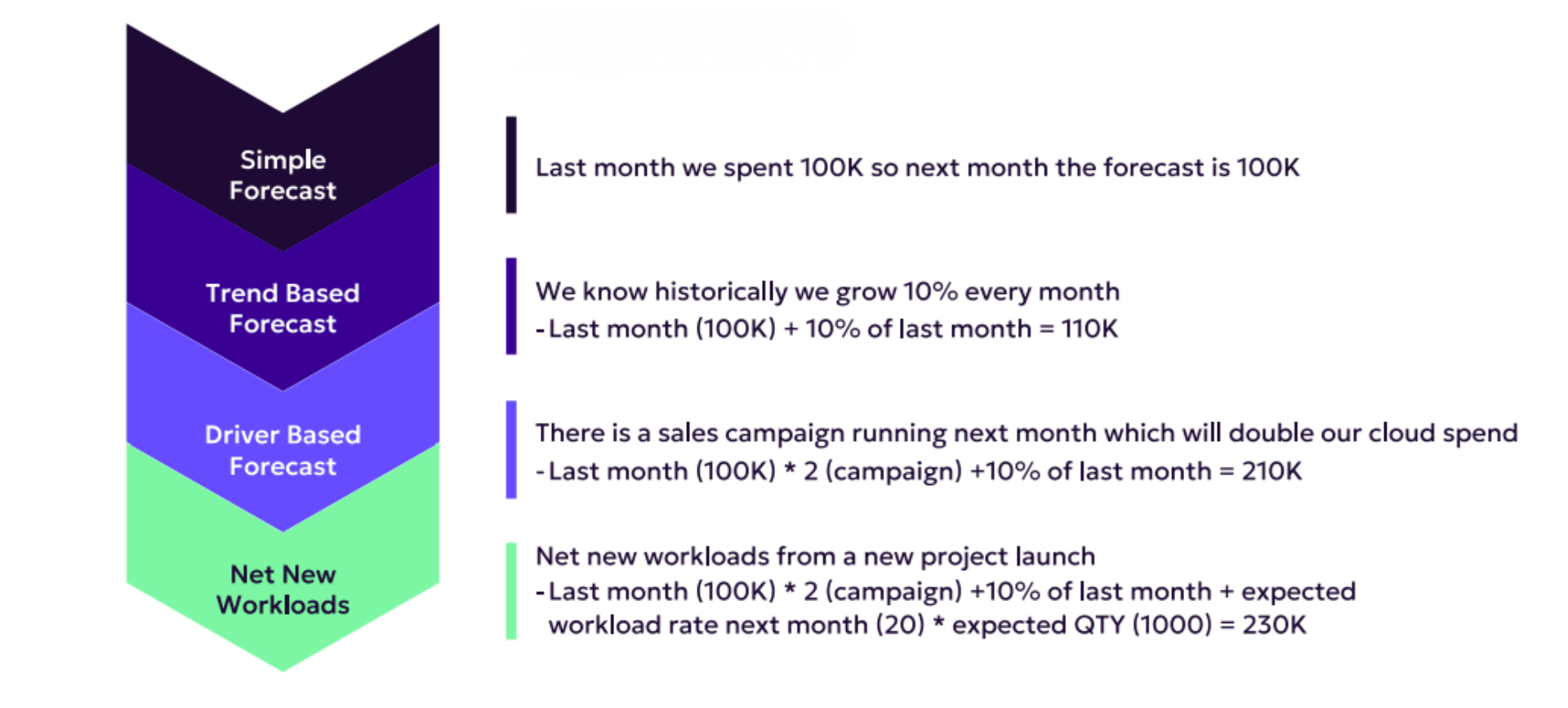
The best way to enhance the accuracy of your forecasts is by combining various data sources, including operational metrics and external benchmarks. By adopting multi-dimensional forecasting models that take into account variables like seasonality, project launches, and market changes, you will be able to get a more complete picture of your future expenses.
Keep your models accurate by conducting regular reviews and updates that reflect the latest data and assumptions. The FinOps Foundation provides an example of the different layers to consider when elaborating your forecast.
Crafting a smart approach to FinOps is a must for companies seeking substantial cost reductions, streamlined operations, and flexible financial management. In a cloud market dynamized by AI and other advanced technologies, adaptability becomes crucial. Staying updated with industry advancements, embracing new technologies, planning carefully, and fostering a work environment that promotes continuous learning and collaboration are fundamental. This approach not only helps manage cloud costs effectively, but also optimizes the value derived from your cloud resources, and makes room for innovation.
Looking ahead, we can anticipate that FinOps strategies will not only promote profitability but also adhere to environmental and social governance principles. Whereas only 19% of FinOps teams currently work alongside sustainability teams, the state of FinOps 2024 shows that 50% anticipate an increasing collaboration with sustainability teams.