Read summarized version with
Every enterprise is running the same experiment right now: pour more budget into AI, wait for the return. Most are getting an unsatisfying result. Not because the models are weak, and not because the use cases are wrong, but because the data underneath was never built for a system that has to act, not just report.
Three different organizations reached the same conclusion this year from three different angles. Accenture found that only 7% of companies have built the data foundations required to scale advanced AI. McKinsey found that only 7% of companies have fully scaled AI across their organization and pinned the bottleneck on the same root cause. We also surveyed IT leaders and found that 72% don’t have data of the right quality, overlaid with the governance to support advanced AI, despite 85% believing their data strategy is “clearly defined.”
That’s not statistical coincidence. It’s the same wall, measured from three different sides. Somewhere between 92% and 93% of enterprises run AI initiatives on a data foundation that was never built for the job. And the cost of that gap shows up every quarter in AI projects that get paused, revised, or quietly deprioritized because the data underneath them can’t be trusted, accessed, or explained.
This article is a benchmark: where the average enterprise actually stands right now, what the leaders are doing differently, and most importantly, what to do about it, with real examples of companies that have already closed the gap.
“Good enough for reporting” doesn’t mean adequate for AI
For two decades, a good data program meant complete, accurate, consistent, and governed information sitting in structured tables ,built for a human analyst to query, and a dashboard to render. That standard isn’t going away. But it’s stopped being sufficient, and the reason is worth sitting with.
Traditional data was built to inform a decision. AI-ready data has to be built for a system to act on it.
Our research puts it bluntly: AI-ready data is data designed for machines and agents to act. Consider the example from our experience: a global hotel chain ran its reservations for years through a system that treated rooms as broad categories. Guest preferences:a high floor, an ocean view, a corner balcony were captured as free-text notes typed by a reservations agent. A human could read those notes and make a judgment call. An AI system couldn’t reliably act on them at all: there was no structured field to query, no way to price a preference, no way to guarantee it got honored. Once the hotel chain restructured those preferences into proper bookable data fields, two things happened simultaneously: guest experience improved, and the chain unlocked incremental revenue it hadn’t been able to price before. Same information. Different scaffolding. Only one version was machine-usable.
That’s the shift in miniature. AI-ready data means:
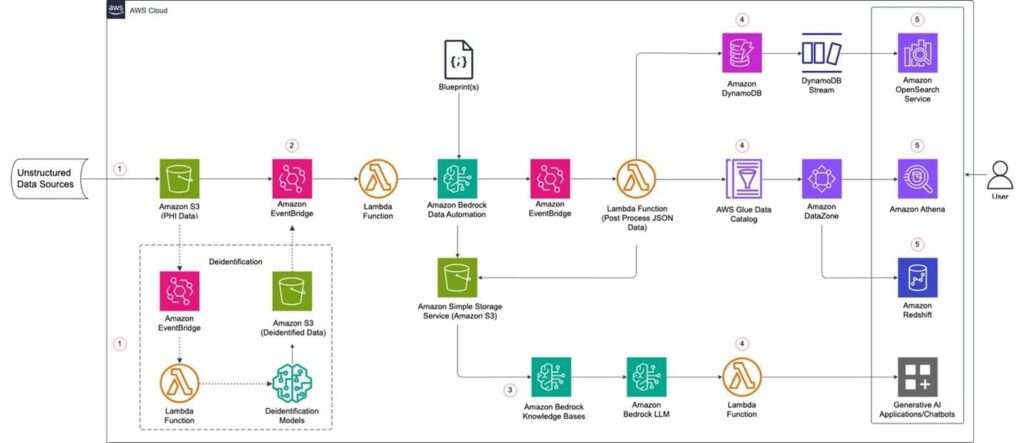
- A referential corpus, not just transaction tables. The unstructured material: contracts, call transcripts, engineering diagrams, internal wikis, tribal knowledge that’s never been written down has to become as usable as the structured data sitting in the ERP.
- Explicit semantic meaning. What does “active customer” mean? If a person querying SQL, a person searching a knowledge base, and an AI agent retrieving a vector embedding all get different answers to that question, nothing built on top of it can be trusted.
- Real-time freshness. A document can be perfectly accurate in full and still produce an incorrect AI answer if the fragment retrieved was superseded, outdated, or taken out of context. Static, batch-refreshed data increasingly isn’t fast enough.
Where the average enterprise actually stands today
Strip away the survey jargon and a consistent, uncomfortable picture emerges. Confidence is high. Control is not. 84% of IT leaders told us they’re confident in the accuracy and completeness of their organization’s data. But only 18% say their data is fully governed: the rest are operating with meaningful blind spots. 79% say their AI-backed initiatives are actively hindered because they can’t access 100% of the data they need, across every environment it lives in. That’s not a minority problem; that’s four out of five organizations building AI on a foundation with known holes in it.
The fuel for AI is the data being migrated last. Among organizations moving data to the cloud, 55% are moving structured operational data: the CRM and ERP records that have always been easy to move. Only 39% are migrating unstructured data: the emails, PDFs, contracts, and knowledge articles that advanced AI depends on most heavily. Just 2% of organizations have fully integrated data and AI to support real-time insight. Everyone else is running gen AI and agentic workloads against a data estate where the most important input: the messy, human-generated, high-context material is still sitting on the sidelines.
Data quality is why ROI disappoints. When we asked IT leaders why AI initiatives fell short of expected ROI, the top answer wasn’t a weak model or a bad use case – it was data quality, followed by cost overruns and weak integration into existing workflows. Break it down by industry and the pattern sharpens: software/technology and public-sector organizations blame data quality most directly; healthcare, manufacturing, and financial services companies instead point to weak workflow integration the data might be fine, but it never gets to the point of use in a form the workflow can consume.
Regulated industries carry the widest gap and the highest stakes. Telecommunications organizations report the strongest position: 89% say they have complete visibility into where their data resides, and 84% can access 100% of their organization’s data on demand, in any format. Financial services and the public sector trail badly: roughly 30% and 16% respectively report the same level of access. That gap is the direct cost of operating under heavier compliance obligations without the modernized governance layer that would make compliance and accessibility compatible. It also means the industries with the most to gain from AI-driven efficiency – claims processing, KYC, citizen services are the ones furthest from being able to use it safely at scale.
Cloud infrastructure tells the same story from underneath. Recent assessment of 216 enterprise cloud estates found that 59% of workloads have seen little to no meaningful cloud movement: they’re still on-premises, under-maintained, or running years past their intended lifespan. A third are modernized just enough to keep the lights on. Only 8% are being used to actively experiment with advanced technology. Just one in five companies has migrated 80% or more of its applications. The easy migrations are done. What’s left: mainframes, monoliths, regulated core systems is exactly the complex, high-value infrastructure that would matter most to modernize, and exactly what most organizations have been avoiding.
Proof it’s solvable: four companies that closed the gap
Our research isn’t diagnostic, rather full of examples of organizations that made the shift and can show what it bought them.
One of our clients needed infrastructure that could scale globally while still meeting local regulatory requirements in each market: a problem financial services companies everywhere recognize. Instead of patching together market-by-market systems, we built Analytics + Data + AI (ADA), a single cloud-native data and AI platform serving as the operating foundation across every market it’s in. The result: legacy complexity eliminated, real-time insight enabled, and ,critically, a foundation for decentralized data ownership, meaning individual business units can now experiment and build without waiting on a central team to unblock them.
Kwiksave – turning operational exhaust into a commercial signal. One of Canada’s largest logistics operators, Kwiksave generates enormous amounts of delivery data every day and buried inside that operational exhaust were signals about new potential customers that nobody had the bandwidth to extract. The data itself was a mess by AI standards: metadata structures varied client to client, recipient information was often incomplete, and every record had been designed for operations, not commercial insight. Kwiksave’s first attempt at solving this with fully autonomous AI agents ran straight into the problem McKinsey warns about: the agents sometimes generated low-confidence or outright fabricated data, with operating costs that were impossible to predict.
So Kwiksave, working with Dedicatted, deliberately didn’t go fully autonomous. It built a hybrid system on AWS: deterministic validation first, GenAI enrichment only where it added real value, and a human approval step before anything touched the CRM. The platform normalizes messy delivery metadata, filters out existing customers and irrelevant vehicle types, and blocks duplicate or low-confidence leads before they ever reach a salesperson. As a result, what used to take up to 45 minutes of manual research per lead became a short, structured review, with governed, campaign-ready leads flowing straight into HubSpot and Mailchimp. It’s a clean example of the AI-ready data principle in practice – the fix was restructuring inconsistent operational data into something an AI system could act on safely, with cost and trust built in from the start rather than bolted on after the fact.
Tawseel – making unstructured intent searchable, in two languages at once. Tawseel, one of the most technologically advanced e-commerce players in the Middle East, ran into a version of the semantic-meaning problem McKinsey describes: keyword search simply couldn’t handle how people actually shop. A query like “What do I need for a beach day?” or its Arabic equivalent, with all the contextual nuance that carries has no clean keyword match, and the mismatch was showing up as longer browsing sessions, lower conversion, and missed cross-sell opportunities, while competitors like Amazon were already moving toward AI-driven shopping assistants.
Dedicatted built Tawseel a Rufus-style generative AI shopping assistant on Amazon Bedrock, using a Model-Agent-Search architecture orchestrated through custom MCP servers: one agent retrieves SKUs directly, another runs semantic and hybrid search over the catalog, another pulls in curated web sources when the catalog alone falls short, and a fourth layers in co-bought and trending signals so the assistant can explain why it’s recommending something, not just what. That’s the referential-corpus idea in action: structured catalog data, semantic search, and external context all feeding one system that reasons across languages without losing meaning in the switch. The result was a shopping assistant completing product discovery 20-25% faster, saving shoppers roughly two minutes per session, with projected positive ROI within the first year and operating costs held under 1% of the incremental revenue it drove.
The six disciplines that actually separate leaders from laggards
McKinsey’s research identifies the specific data disciplines that have to be rebuilt, not replaced, when data has to serve autonomous systems instead of dashboards.
- Observability, extended past pipeline monitoring into the AI layer itself: tracking whether retrieved content is stale, whether retrieval logic is drifting, and whether generated answers still align with current source material.
- Data quality management is applied continuously across extraction, chunking, and retrieval, not just checked once at ingestion, since a document can be fully accurate and still produce a wrong answer if the wrong fragment gets pulled.
- Metadata management, upgraded to a real control layer: ownership, sensitivity, and allowed usage defined at the level of the extracted object (a clause, a speaker turn, a table), not just the source file.
- Data lineage, extended to trace which version of a document was indexed, how it was segmented, which chunks were retrieved, and how the final prompt was assembled: the full dynamic chain.
- Governance and controls, moved to runtime: policy has to be enforced at the point of embedding and retrieval, because a document can be access-restricted in storage and still leak sensitive fragments through a prompt if the embedding layer doesn’t inherit the same rule.
- Platform and tooling architecture, standardized so extraction, embedding, and retrieval infrastructure gets built once and reused, the exact discipline behind the $10–20M cost-avoidance example above.
Companies executing these well don’t spread their effort evenly, either. Accenture’s data reinventors are nearly 2x more likely than peers to concentrate their resourcing on the one or two domains that matter most in their industry’s value chain: research and discovery in life sciences, network operations in telecom, core banking in financial services, rather than funding a long tail of low-value pilots that never individually justify the infrastructure investment.
The math: what readiness is actually worth
Worldwide data reinventors carry an estimated 4.5 percentage point EBIT margin advantage over industry peers – a margin uplift of up to 1.6x measured over the last three years. That’s not a projection; it’s what’s already showing up on the income statements of the 7% who got the foundation right. The inverse carries a cost too, and it’s more common than the upside. More than 80% of organizations delay, limit, or alter AI initiatives at least occasionally because of data-related risk. Each delay costs a quarter of lost compounding – competitors who solved the foundation problem keep extending their lead while the rest wait for the data team to catch up.
Not every organization is starting from the same place, and pretending otherwise leads to bad advice. Our cloud research groups companies into three practical profiles and the framing works just as well for data maturity more broadly. Here’s what to actually do at each stage.
If you’re a Stabilizer (roughly 60% of companies)
You’re still working through legacy constraints: on-premises systems, partial migrations, minimal automation, controls that fragment across cloud and on-prem. The instinct to chase a big AI initiative here is the wrong one – it will fail on the foundation. Instead:
- Tie every cloud and data investment explicitly to a business objective: cost control, resilience, or a specific compliance requirement, so funding decisions stop being made on faith. One global food company hit a post-migration cost shock when consumption spiked and it exhausted its cloud budget 40% early, with no visibility into why. Establishing clear ownership, spend tagging, and product-level cost transparency delivered an immediate 15% cost reduction and identified another 50% in storage savings – funding the next phase of modernization instead of stalling it.
- Pick a handful of high-impact, customer-visible systems and modernize those first, making them fully observable in real time before touching anything else. Don’t attempt a wholesale migration; fix the systems that generate the most operational pain and the most visible wins.
- Define data products with lineage from day one, even at small scale, so the small amount of AI-ready data you do build is trustworthy rather than another pile of unmanaged files.
If you’re an Optimizer (roughly a third of companies)
You’ve completed the core migration and built a stable cloud estate, but it was built for continuity, not innovation. Data integration and AI-driven analytics are basically working, but compliance and data sprawl are still the top blockers to going further. The mistake at this stage is declaring victory too early. Instead:
- Pick one revenue-critical process: pricing, claims, parts availability and rebuild it end-to-end on a modern platform, tying performance, cost, and business outcome together explicitly. Then codify what worked into templates, controls, and runbooks so the next process scales faster and more safely. This is the “prototype once, template everywhere” discipline that separates Optimizers who eventually become Innovators from Optimizers who stay stuck shipping incremental features forever.
- Build a governed cloud layer that makes both structured and unstructured data accessible, with explicit business meaning attached, not just a data lake with better search.
- Introduce AI FinOps on top of existing cost management, so the cost and value of each AI use case is forecast and measured over time, rather than discovered after the fact in a monthly cloud bill.
If you’re an Innovator (roughly 8% of companies)
Advanced technology already runs across most of your workloads, with strong observability and automation. Your remaining gap is integration: only about a quarter of Innovators have fully connected data and AI for real-time insight, and even fewer have full automation across cloud operations. The next moves should target the board, not the backlog:
- Redesign a mission-critical workflow for autonomous, AI-paced decision-making: not as a pilot bolted onto the existing process, but as a genuine reinvention where AI agents handle routine decisions and humans focus only on exceptions and strategy.
- Deploy agents with tight scope and clear guardrails: define explicitly what “good” looks like, when the system escalates to a human, and how to roll back a bad decision. Track revenue impact and risk (accuracy, bias, security) side by side; trust beyond the pilot team depends on both.
- Turn the capability itself into a product or partner offering. Utilities are already packaging predictive pricing signals as “price-smart power” plans. Automotive companies are offering fleets guaranteed repair windows and parts commitments based on predictive maintenance data. If your AI-driven decisions are good enough to trust internally, they’re often good enough to sell externally.
Five moves every organization should make now, regardless of stage
Fund and measure based on reuse, not experimentation. The organizations pulling ahead aren’t the ones running the most pilots, they’re the ones building a foundation once and using it fifteen times, at a fraction of the marginal cost.
Capture unstructured and tacit knowledge as a first-class asset, not an afterthought bolted onto a structured-data roadmap that was designed years before generative AI existed.
Federate instead of centralize. Build one enterprise-wide logical view of data that business units can build on independently, not a single team that becomes the bottleneck for every new AI use case.
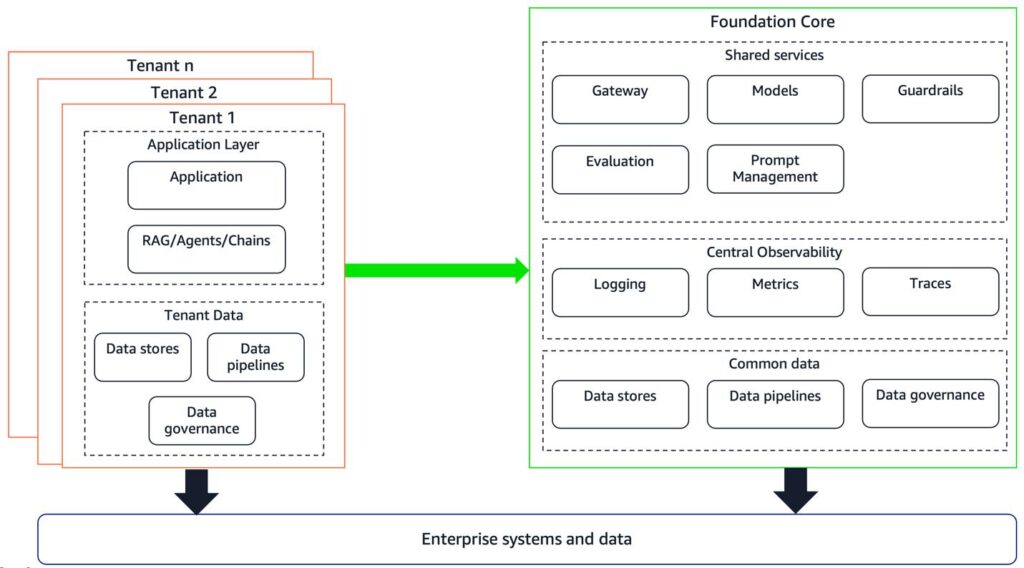
Productize data. Treat both structured and unstructured content as a reusable, quality-checked product with a defined owner, not a one-off extract pulled for a single project and thrown away afterward.
Push governance and lineage all the way to the point of retrieval and generation. This is the single most common failure mode McKinsey identifies: access controls that work perfectly on the source document and fail silently the moment content is chunked and embedded.
Standing still is a decision, not a pause
Every organization in this research had the option to wait. Almost all of them are, whether they’d describe it that way or not: 92 to 93% haven’t yet built the foundation advanced AI actually requires. But waiting isn’t neutral. It’s a strategic choice with a quarter-over-quarter cost, and the data reinventors already sitting at a 4.5-point EBIT margin advantage are proof that the cost is real and compounding.
The path forward doesn’t require betting the company on a single transformation. It requires being honest about which of the three profiles above actually describes you today, picking the one or two moves that matter most for that stage, and executing them with enough discipline to reuse the win rather than rebuild it from scratch next quarter. The 7% who’ve already done this didn’t get there by chasing the newest model. They got there by treating data readiness as infrastructure, not initiative and building it once, so it compounds.
If you’re evaluating where to start: whether that’s a Well-Architected review of your existing data environment, a scoped GenAI pilot in a specific business process, a data platform modernization project, or building the agentic workflows this article describes, that’s exactly the kind of conversation our team works through with clients regularly.
As an AWS Premier Tier Services Partner and a top 2% global AWS partner with GenAI Competency and MSP designation, we combine deep cloud expertise with hands-on engineering delivery. Our teams bring AWS data and analytics expertise and real implementation experience, from the retail, logistics, and e-commerce examples above, to help you plan and execute a data-driven AI strategy. We’re happy to compare notes on where your organization sits against this research and talk through where your environment stands today. Get in touch with our team at Dedicatted to talk through where your environment stands today.
Related service. Cloud software development services at Dedicatted.